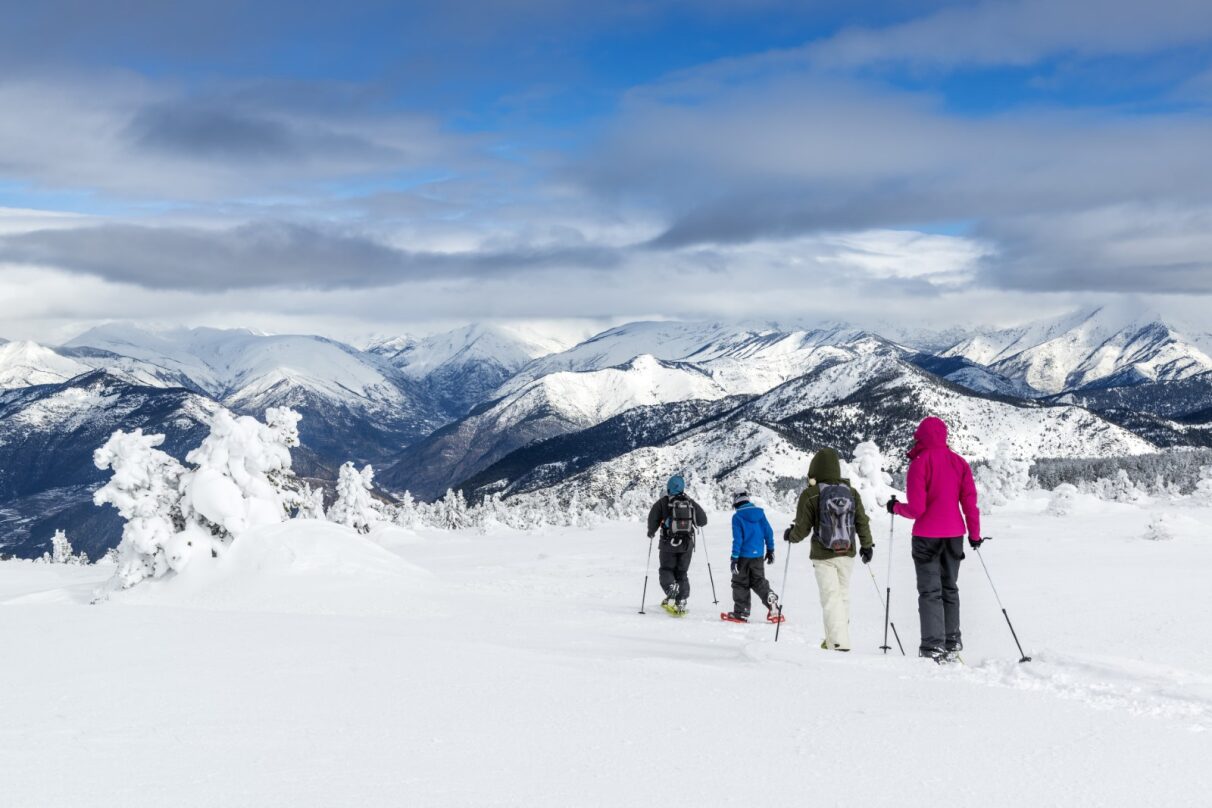
The flora and fauna of the high mountains are adapted to the adverse climatic conditions of this environment. However, during the winter, with the low temperatures and the arrival of snow, life becomes much more difficult.
Problems it can cause
What in spring might be a minor inconvenience or stressful moment, in winter can mean the difference between death and survival. Winter is a time with limited food availability, and many species only have limited energy to survive without moving too much. These extreme winter conditions test the adaptations and resources of the plants and animals that inhabit the area.
Best practices
For this reason, backcountry skiers, cross-country skiers and snowshoers must be aware of the vulnerability of alpine wildlife during the winter and follow these recommendations:
Engage in your activity at a prepared ski resort whenever possible and travel on the side of the slopes in single file, avoiding venturing into the forest and following the resort’s regulations.
If you do not practise your activity at a station, travel along main trails and on signposted routes.
Plan your itinerary to avoid areas with threatened fauna.
Winter mountain activities entail significant risks. Get training in meteorology and avalanche safety and consult the avalanche hazard bulletin before each outing.
In some cases, if there is no alternative and you have to cross an area with the presence of threatened fauna, follow the tracks of other skiers and snowshoers.
In areas where wood grouse are present, as it is a forest bird, move through open spaces and avoid crossing the forest. If at some point you have to pass through the forest, do so without lingering and quietly.
If you spot threatened wildlife, move away quickly and quietly. Don’t make them run away.
Aquest lloc web utilitza galetes (cookies) pròpies per millorar l’experiència de navegació i oferir continguts d’interès. Per continuar la navegació cal acceptar la nostra política de galetes.